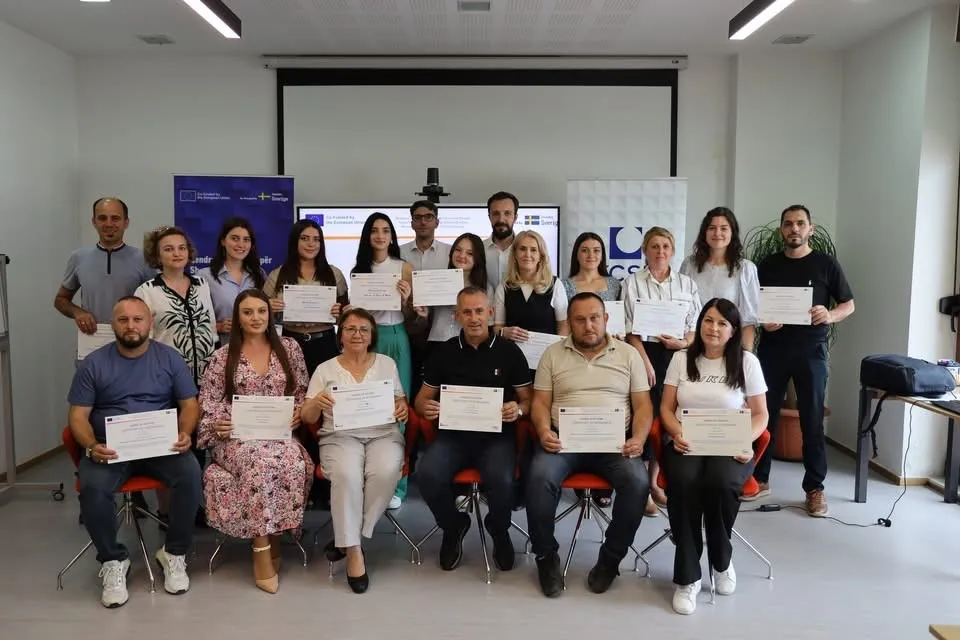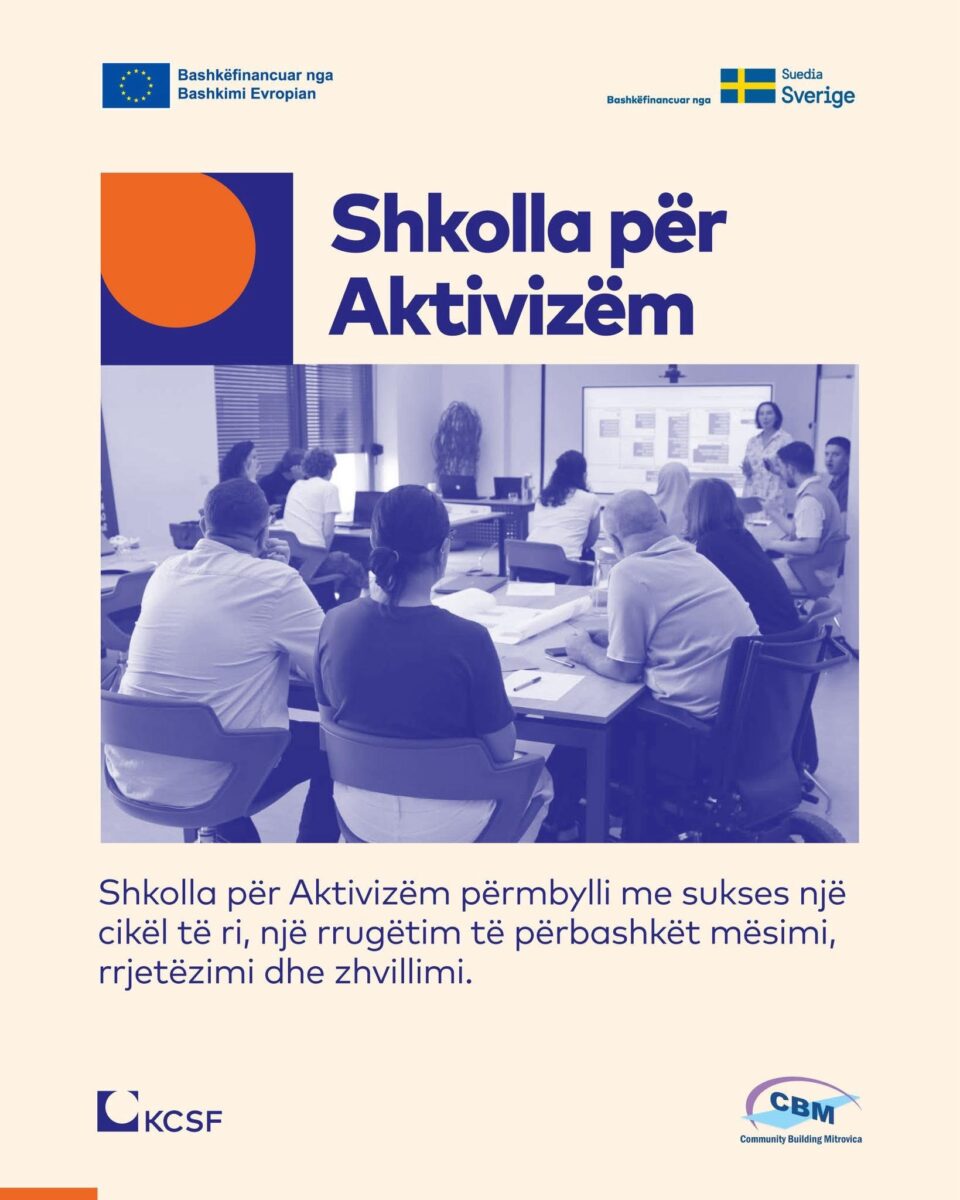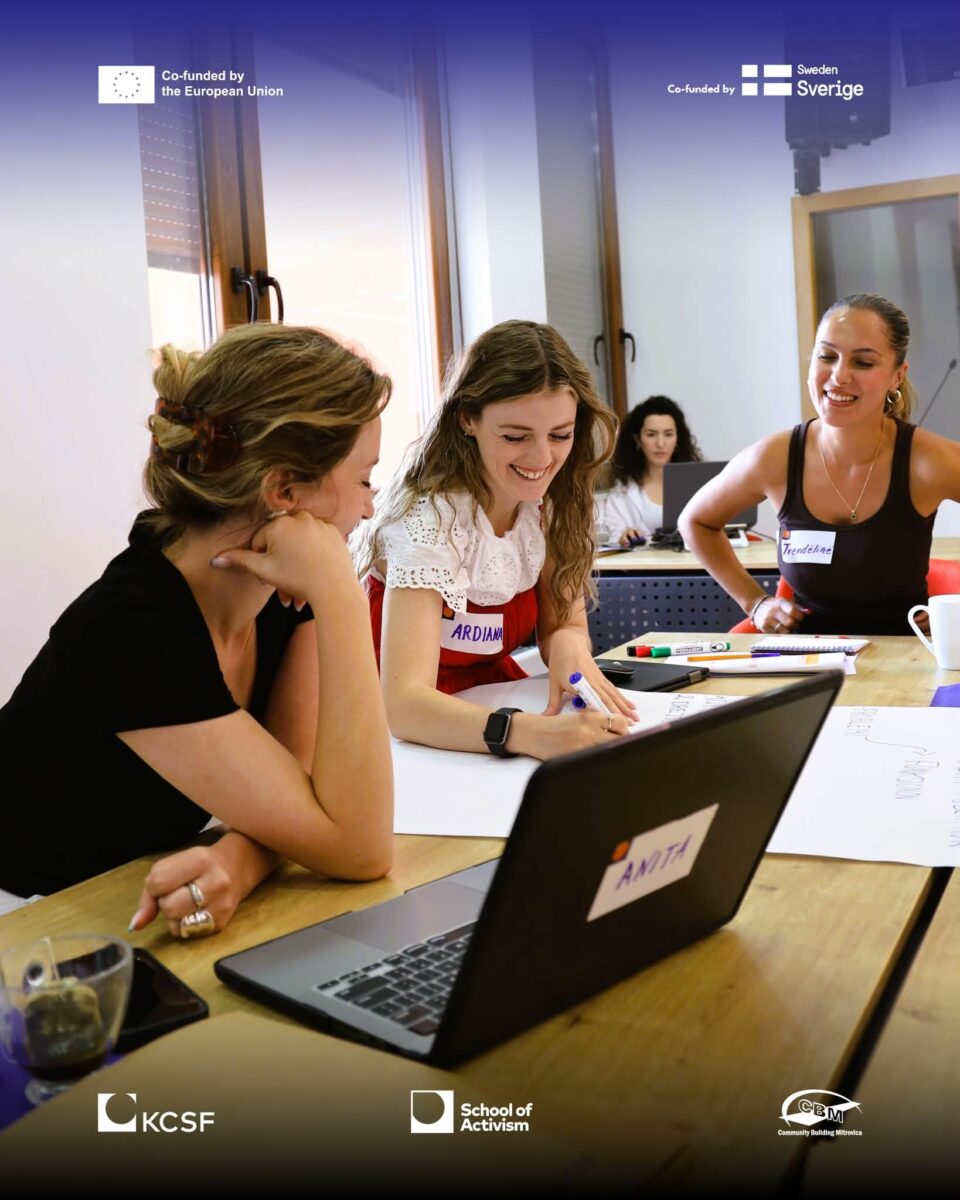


Shkolla për Aktivizëm përmbylli me sukses një cikël të ri, një rrugëtim të përbashkët mësimi, rrjetëzimi dhe zhvillimi.
31/07/2026
THIRRJE PËR APLIKIM PËR ORGANIZATAT E SHOQËRISË CIVILE – AKADEMIA FINANCIARE
24/08/2026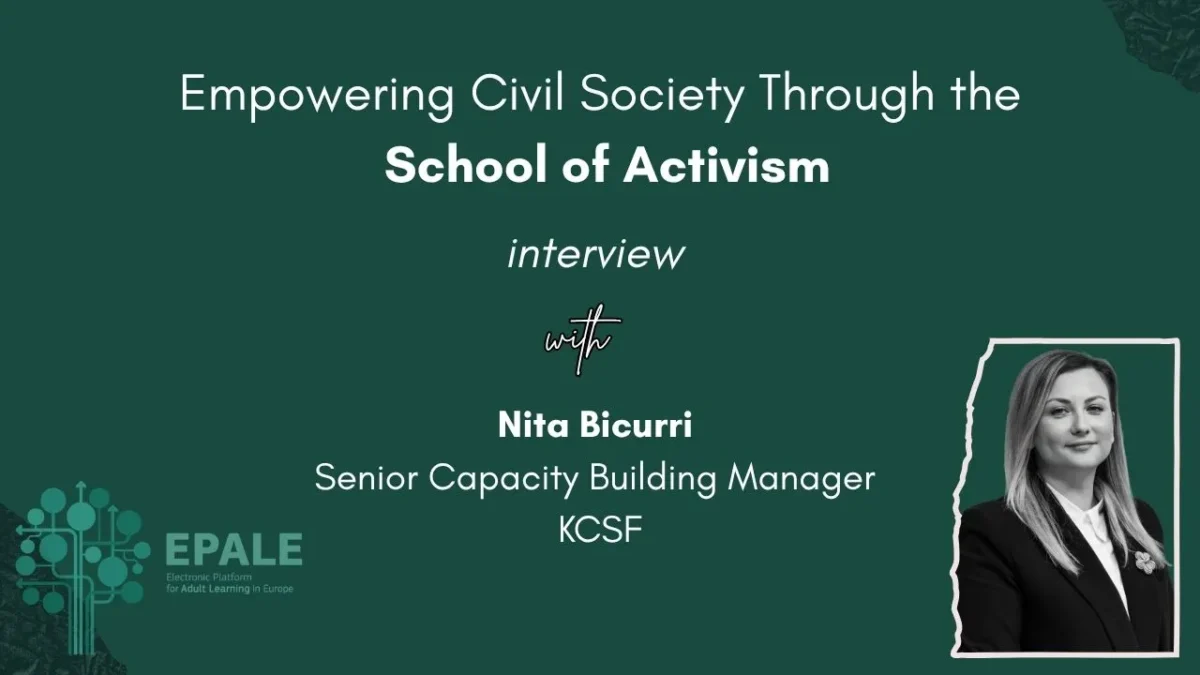
As community needs evolve, continuous learning helps civil society professionals strengthen their skills and organisations and increase the impact of their work.
One initiative supporting this development is the School of Activism, a professional learning programme developed by the Kosovar Civil Society Foundation (KCSF) and Community Building Mitrovica (CBM) to strengthen the capacities of community-based civil society organisations (CSOs) across Kosovo. Designed as a space for professional education and civic engagement, the programme equips CSO professionals with the knowledge, skills and competencies needed to strengthen their organisations, engage communities more effectively and participate in policymaking through advocacy and transparent engagement.
Each year, the School brings together 20–25 selected CSOs for a comprehensive learning journey consisting of six two-day training modules covering key areas such as organizational governance, gender mainstreaming, fundraising, advocacy, and community mobilization. Participants also benefit from mentoring and networking opportunities that support their long-term organizational development.
Since its launch, the School of Activism has certified more than 120 organizations and trained over 400 representatives of civil society organizations from diverse geographic regions, sectors and backgrounds, demonstrating its growing contribution to strengthening Kosovo’s civil society (KCSF).
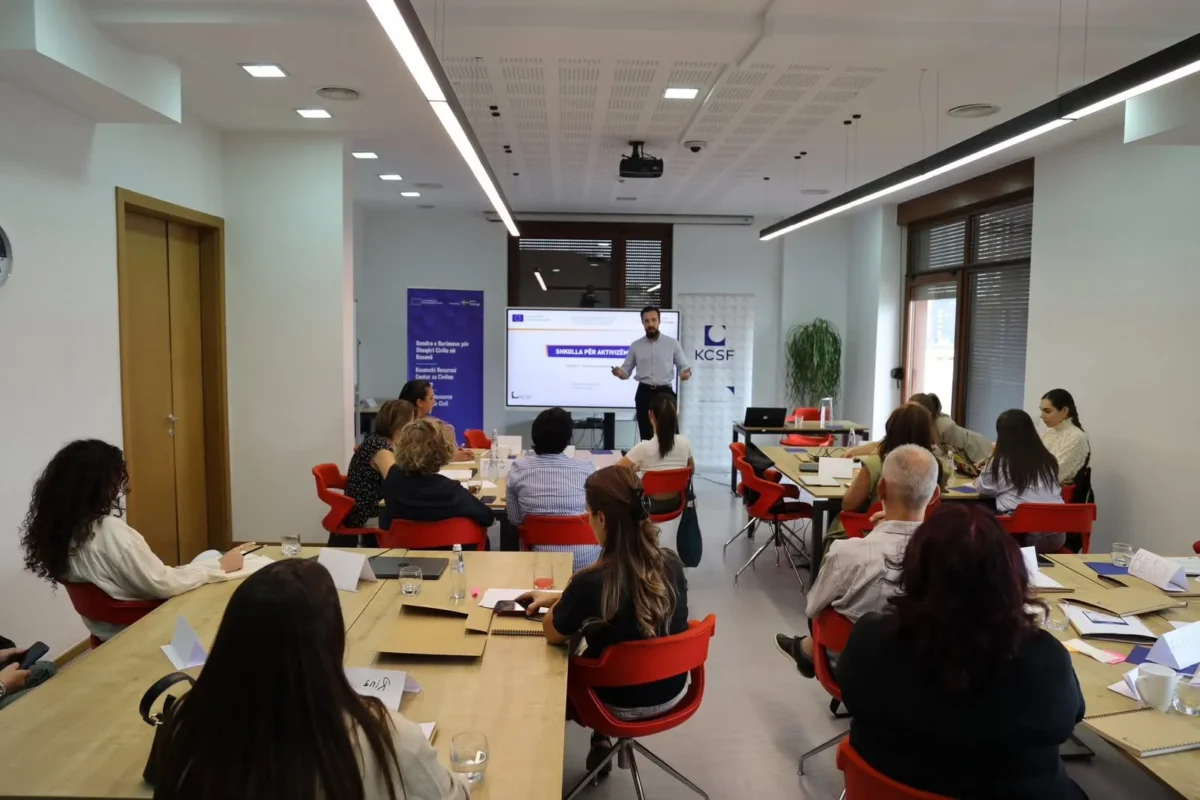
To learn more about the School of Activism, its learning approach and its impact on adult learners—particularly civil society professionals—we spoke with Nita Bicurri, Senior Capacity Building Manager, KCSF.
The School of Activism has now reached its fifth edition. What inspired KCSF to establish this program, and what gap in the civil society sector was it designed to address?
The School of Activism was established in response to a clear gap in professional and staff-development opportunities within civil society organizations. Much of the learning in the sector takes place informally, through daily work and practical experience, without sufficient access to structured programs that connect individual skills with broader organizational development. Drawing on KCSF’s continuous engagement with CSOs, the School was designed to provide a comprehensive learning journey that strengthens both staff and their organizations. It helps participants understand the importance of establishing sound internal systems, engage and remain accountable to their constituencies, diversify resources, assess their impact, and participate more effectively in public affairs and policymaking. In this way, the School contributes to more professional, transparent, resilient, and sustainable civil society organizations that remain connected to their communities, respond effectively to their needs, and participate meaningfully in policymaking processes.
The program combines training, mentoring, and networking. From your perspective, what makes this learning model particularly effective for professionals working in civil society?
The School of Activism is grounded in the values of participation, accountability, transparency, inclusion, and responsiveness to communities. Its purpose is not only to develop the professional skills of individual participants, but also to help build stronger and more sustainable civil society organizations that remain connected and accountable to the communities and constituencies they serve. As such, its learning model combines lectures, discussions, practical exercises, peer exchange, networking, and tailored mentorship. This combination enables participants to gain knowledge, reflect on their own experiences and immediately connect what they learn to their organizational realities.
The School consists of six modules, and participating CSOs can assign different staff members to each module according to their roles and responsibilities. In this way, capacity development is distributed across the organization rather than concentrated in one individual. It also encourages colleagues to exchange knowledge internally, discuss improvements and take shared responsibility for applying new practices. Further, the tailored mentorship that follows the training is essential to the model, helping organizations translate the knowledge gained into practical internal processes, systems, and tools that improve their overall functioning and effectiveness In this way, the model connects individual learning with lasting organizational change, helping CSOs become more effective, accountable, and transparent and better able to serve and represent their communities.
Looking back at the previous editions, what changes or transformations have you observed among participants or their organizations after completing the School of Activism? Can you please share some impressions by the participants?
Looking back at previous editions, the most significant transformation has been participants’ ability to translate learning into concrete organizational practices. With follow-up mentorship, several organizations have strengthened their internal governance structures, clarified staff and governing-body responsibilities, developed conflict-of-interest and gender-equality policies, improved monitoring and evaluation systems, developed strategies for resource diversification and designed more structured approaches for their advocacy and community mobilization.
For example, organizations have assessed their existing governance arrangements, identified key gaps, and developed practical documents and templates for decision-making, internal meetings, coordination, and accountability. For some organizations, these processes included reviewing governance and coordination practices, developing templates for roles, procedures and meetings, and supporting the drafting of different strategic and internal governance documents.
The programme has also encouraged participants to explore new approaches to resource diversification and financial sustainability. Reflecting on this aspect of the training, Marigona Rexha from Public Space Equity (PSE) in Mitrovicë shared:
“Before this training, I had not realized how many opportunities community fundraising could create. It was very valuable to learn about successful practices and new approaches to diversifying financial resources. One of the changes I would like to introduce in our organization is to appoint a staff member responsible for fundraising while engaging the entire team in the process. I believe these steps will help us become more financially sustainable.” – Marigona Rexha, Public Space Equity (PSE), Mitrovicë
Overall, participants have particularly valued the school’s practical and reflective approach. In their feedback, they have emphasized that it helped them examine how their organizations function, identify weaknesses that had previously been overlooked, and gain tools that could be applied directly in their daily work. They have also appreciated the exchange with other CSOs, which allowed them to recognize shared challenges and learn from different organizational experiences.
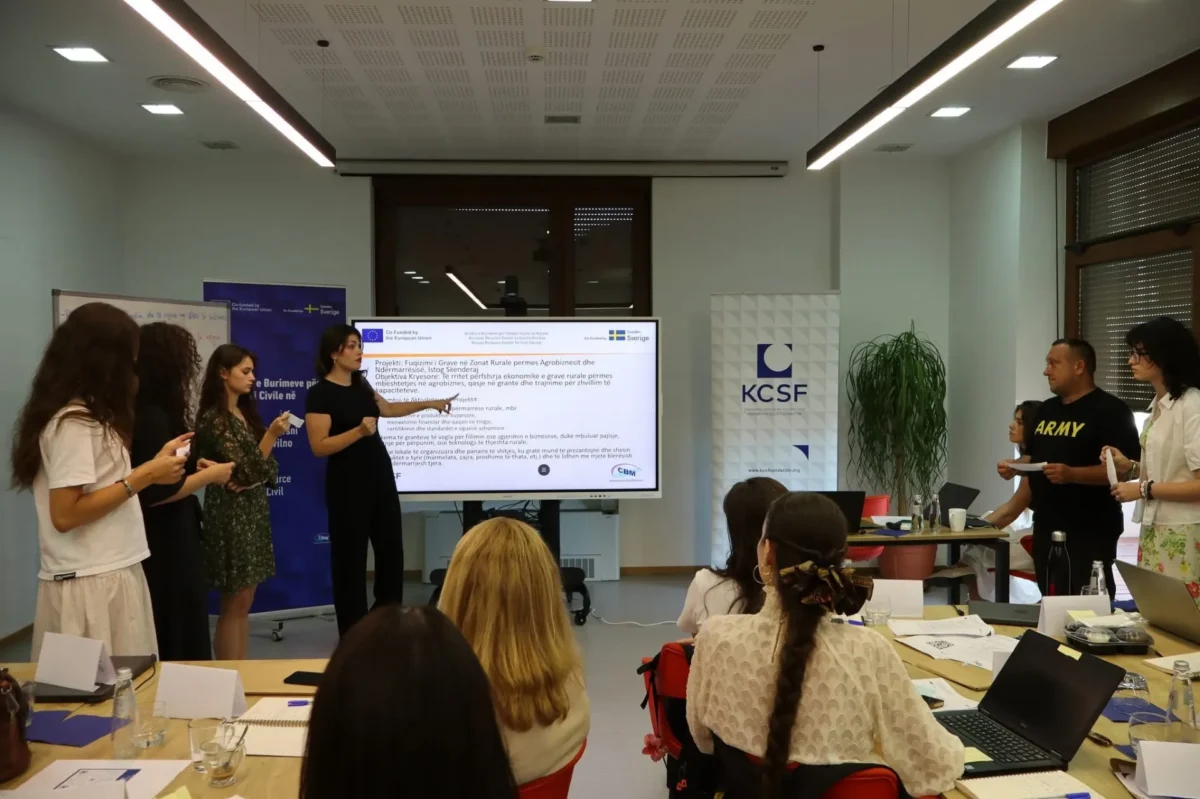
The curriculum covers topics ranging from internal governance and fundraising to advocacy and community mobilization. How were these learning priorities identified, and how do they respond to the evolving needs of Kosovo’s civil society organizations?
The learning priorities were identified through KCSF’s continuous research, assessment of the civic space and daily engagement with civil society organizations, assessments of their organizational needs, feedback from participants and trainers, and lessons from previous editions of the School of Activism.
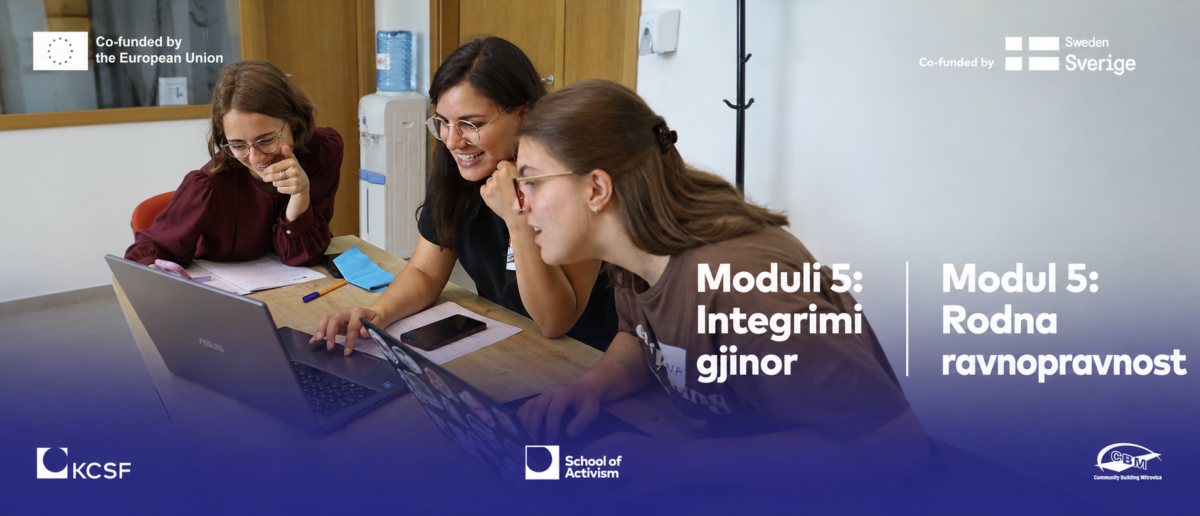
Our daily work with CSOs also gives us direct insight into the challenges they face, from strengthening internal governance and diversifying funding to engaging communities and influencing policymaking. The module on Internal governance serves as the foundation of the curriculum because strong civil society organizations must first be built from within. Clear structures, defined roles and responsibilities, sound management practices, and effective accountability mechanisms enable CSOs to manage resources responsibly, operate sustainably, and maintain the trust of their communities, partners, and donors. The other modules build on this foundation and address interconnected organizational needs. Monitoring, evaluation, and learning help organizations assess their impact and make evidence-based decisions; resource diversification responds to an increasingly uncertain funding environment; and community mobilization and participatory advocacy strengthen the ability of CSOs to represent community priorities and influence policymaking. Gender mainstreaming is integrated as an essential component of effective and accountable organizational development. It enables CSOs to examine how diverse needs and experiences are reflected in their internal structures, programs, decision-making, and engagement with communities.
Importantly, the curriculum is therefore not static, it is regularly reviewed and adapted to developments in the sector, ensuring that the School addresses immediate capacity gaps while supporting more inclusive, resilient, transparent, and sustainable organizations.
Community engagement and civic participation are central to the program. In what ways do you think stronger learning opportunities for CSO professionals contribute to more active, resilient and democratic communities?
Stronger learning opportunities equip CSO professionals with the knowledge and practical skills to listen to communities, understand their needs, mobilize citizens, and create meaningful opportunities for participation. When professionals have access to structured learning, mentoring, and peer exchange, they are better prepared to translate community concerns into effective initiatives and advocacy, while ensuring that their organizations remain transparent and accountable to their constituencies.
When organizations communicate openly, involve constituencies in shaping priorities, and remain accountable for their decisions, they build trust and encourage people to take a more active role in addressing issues that affect their lives. This strengthens both communities and organizations. Citizens become better informed about their rights and available participation mechanisms, while CSOs are better prepared to connect community concerns with policymaking processes and advocate for inclusive, evidence-based solutions. Over time, this creates more resilient communities that can organize, respond collectively to challenges, and hold institutions accountable, strengthening the culture of civic participation and democracy.
As a final question, what message would you like to share with civil society professionals about the importance of lifelong learning?
Civil society operates in an environment that is constantly changing, and the needs of communities, funding realities and opportunities for civic participation evolve with it. Lifelong learning is therefore not an additional activity; it is essential for remaining relevant, credible, and effective. It’s true value emerges when knowledge is shared and translated into stronger organizational practices, greater accountability and transparency, and more meaningful engagement with constituencies, building more resilient and sustainable civil society organizations.